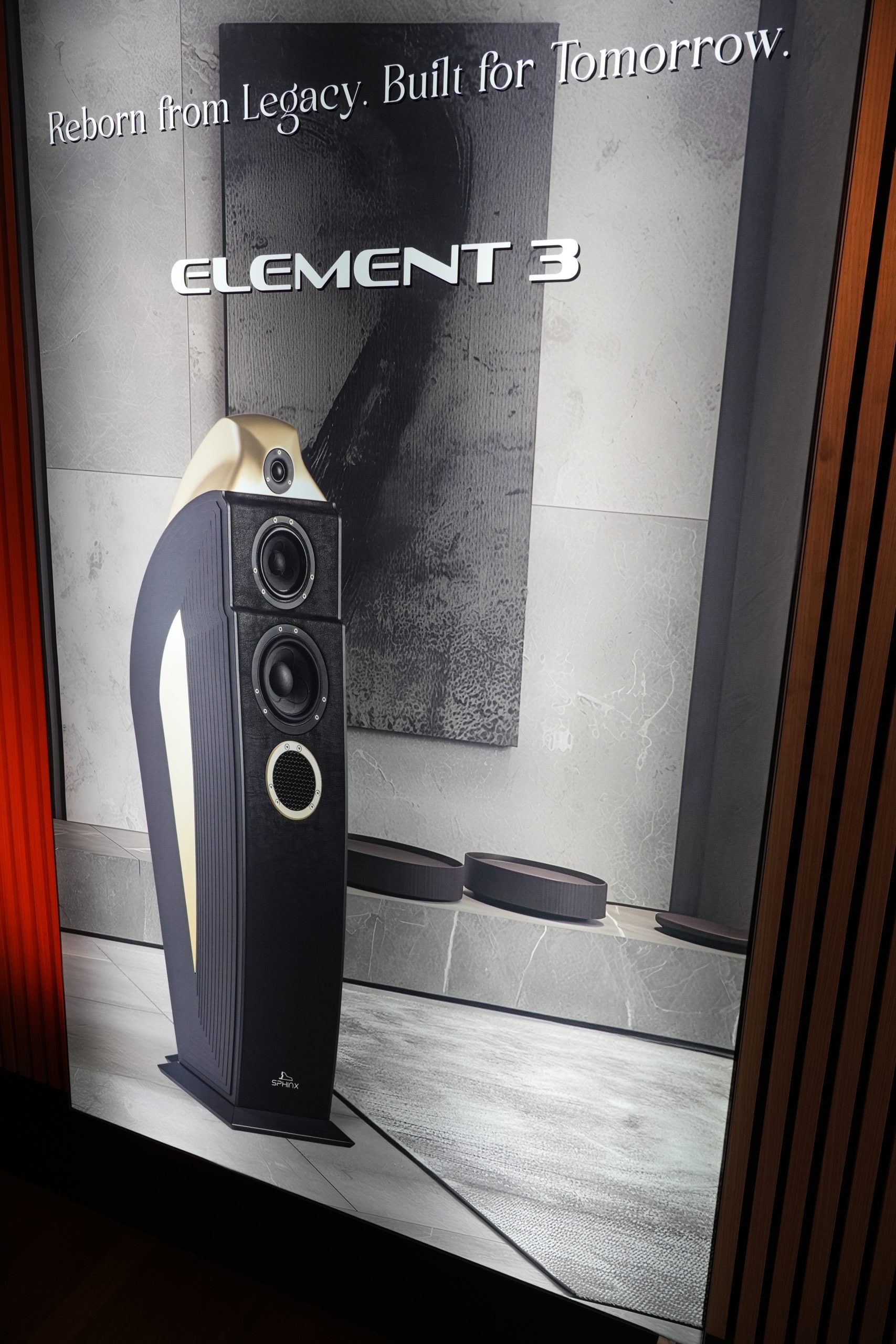
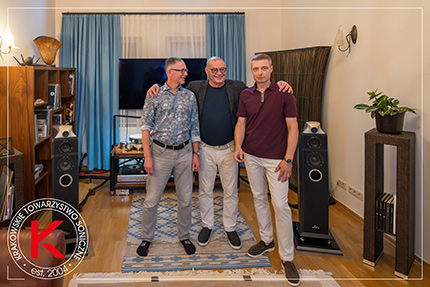
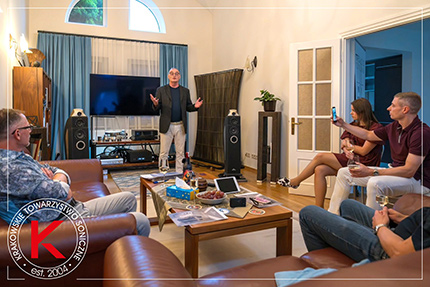
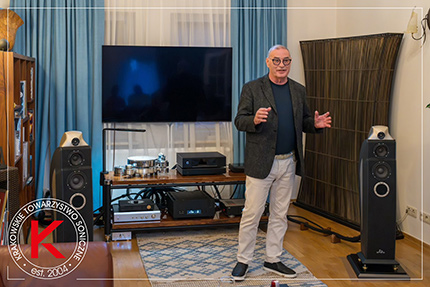
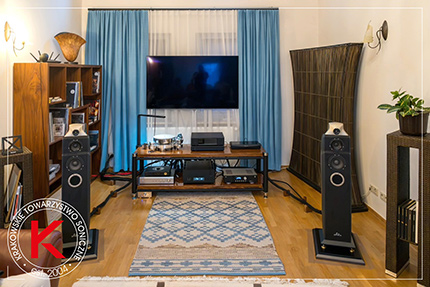
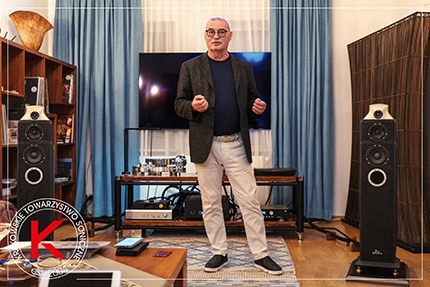
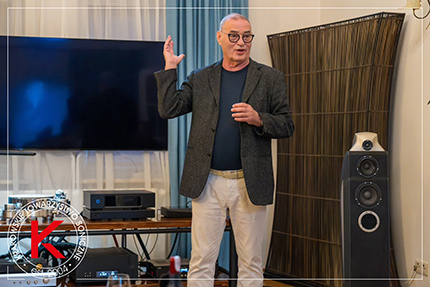
On August 18, Sphinx Audio Engineering founder and chief engineer Edwin van der Kley travelled to Kraków for the 157th meeting of the Krakow Sonic Society. Hosted by High Fidelity’s Wojciech Pacuła, the session was dedicated entirely to the Sphinx Element 3, combining an in-depth discussion of its engineering with an extensive listening session.
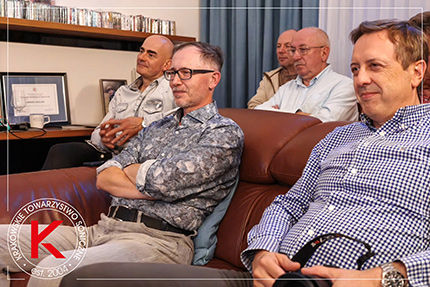
The Krakow Sonic Society brings together music lovers, audiophiles and members of the audio industry to explore audio products, recordings and music through dedicated listening sessions. For its 157th meeting, the focus turned to the Element 3, with Edwin personally joining the group to explain the ideas and engineering behind the loudspeaker.
Inside the engineering of Element 3
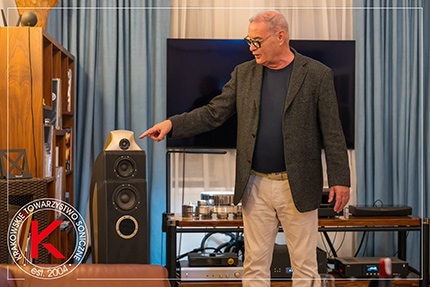
The evening began with a closer look at the development of the Element Series and the challenges the Sphinx engineering team set out to address.
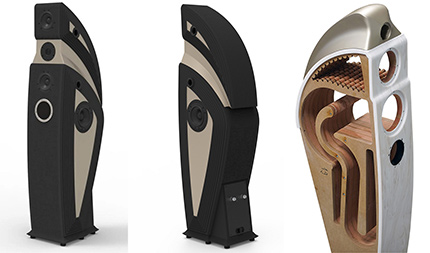
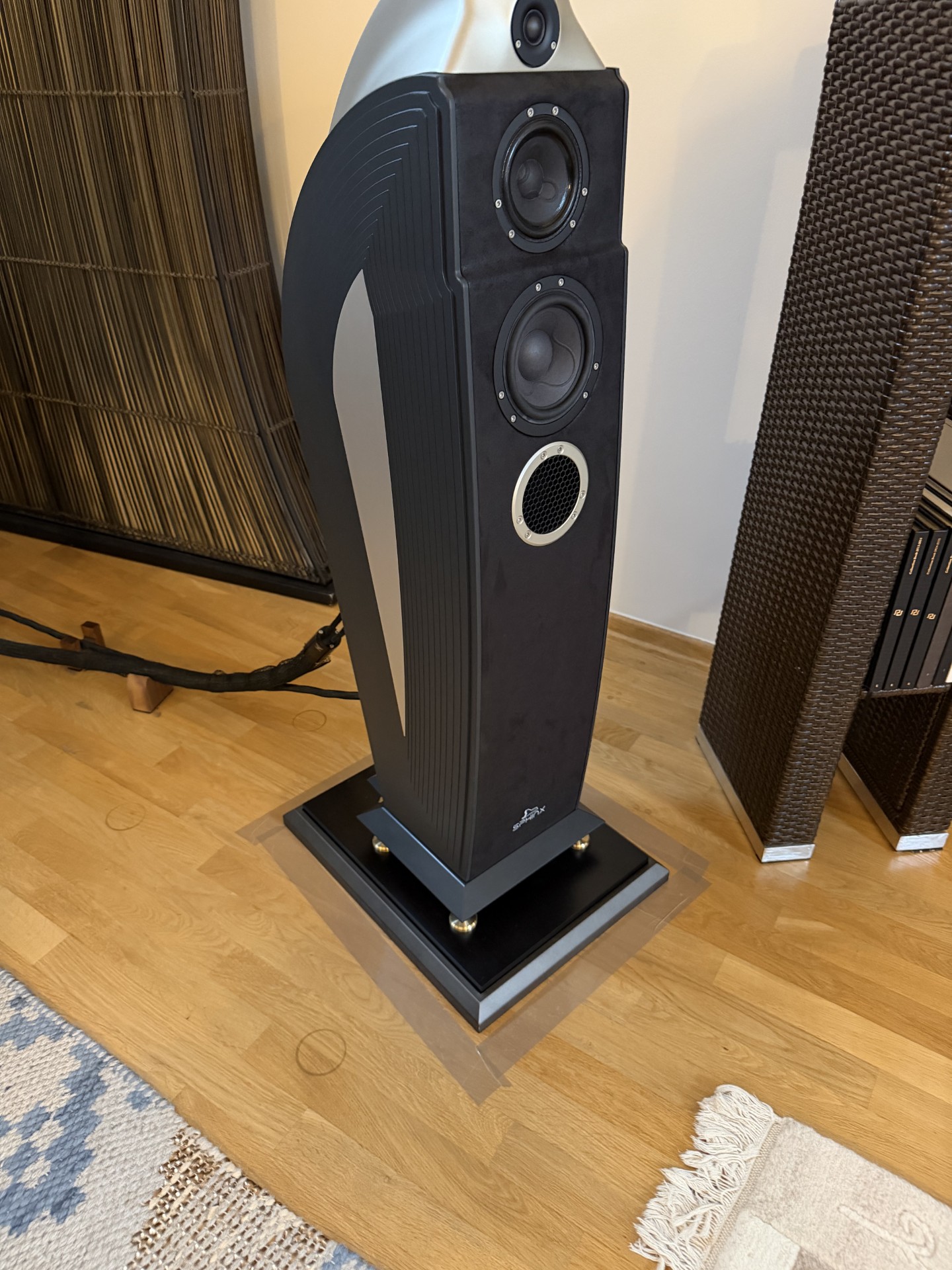
A central part of that development was the behaviour of the loudspeaker enclosure and the acoustic energy generated behind the drivers. Rather than following a conventional closed-box or bass-reflex approach, the Sphinx engineering team spent years researching and modelling different acoustic systems before developing its own transmission-line architecture.
As Edwin explained during the meeting, extensive computer modelling and measurements ultimately resulted in a system using multiple paths of different lengths to control the behaviour of the rear wave. This architecture forms the basis of the bass system used in both Element 3 and Element 5.
The Element 3 also uses relatively small, low-mass drivers. Their size was deliberately chosen to support fast transient behaviour and wide dispersion, helping the loudspeaker maintain consistent radiation beyond the main listening axis.
Controlling the crossover and drivers
Edwin also discussed another defining part of the Element architecture: the way the crossover interacts with the drivers.
Element 3 is not a conventional active loudspeaker. The main amplifier still drives the complete loudspeaker, while dedicated internal buffer amplifiers are used to separate the crossover network from the behaviour of the individual drivers.
This approach is designed to give the crossover a more consistent electrical load while maintaining strong control over the drivers. According to Edwin, it also helps make the behaviour of the filters less dependent on listening level.
The result is a loudspeaker architecture developed around control, phase behaviour, dispersion and transient response rather than one individual specification.
Putting Element 3 to the test
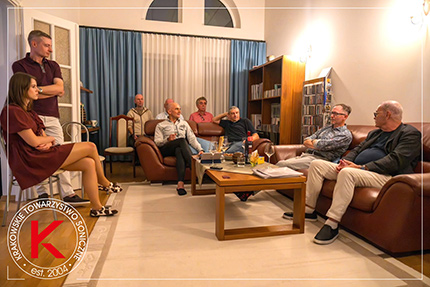
After the technical discussion, the Krakow Sonic Society turned to listening.
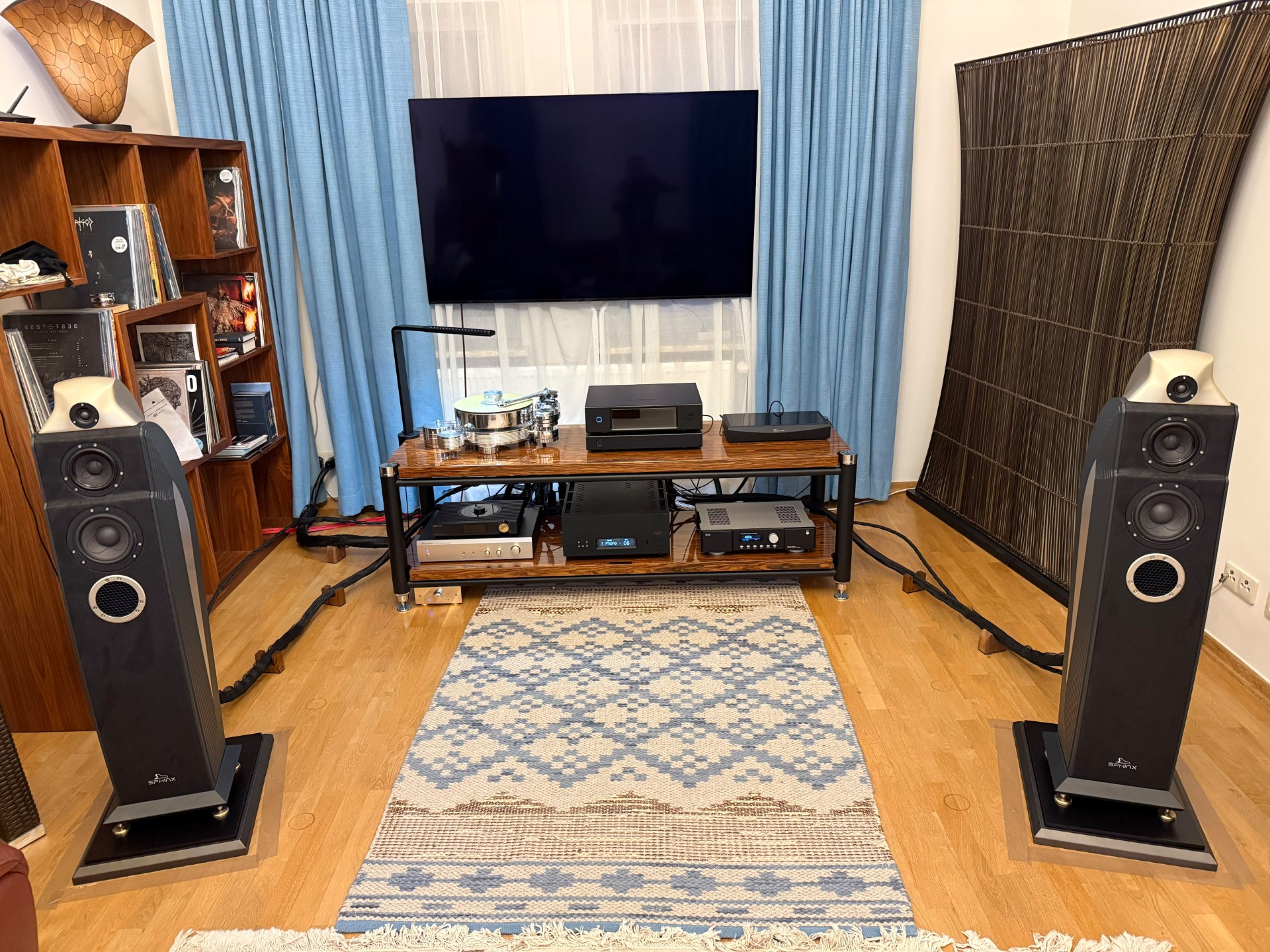
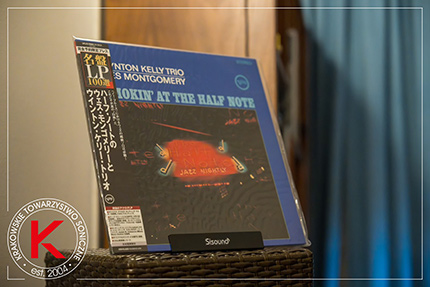
The session was divided into two parts. First came digital playback, with participants selecting music streamed from Tidal and Qobuz. The second part moved to vinyl, including recordings by Cassandra Wilson, Charles Mingus, Miles Davis and Arne Domnérus.
The varied programme gave the group the opportunity to hear Element 3 across different genres, recording qualities and listening levels.
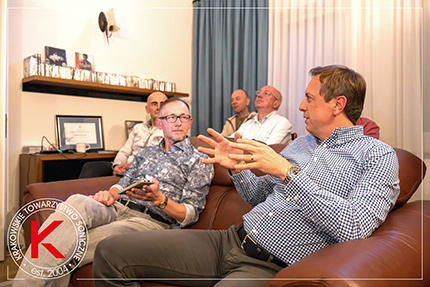
Several participants highlighted the loudspeaker’s spatial presentation, coherence and ability to remain controlled at high playback levels. Others offered more critical observations about aspects of the bass reproduction, making the session an extensive and varied assessment rather than a conventional demonstration.
High Fidelity on the Element 3
In his conclusion, Wojciech Pacuła of High Fidelity described the Element 3 as an exceptional loudspeaker, particularly highlighting the scale of its soundstage and the depth of bass produced from its relatively compact dimensions.
He also noted how clearly the loudspeakers revealed differences between recordings. During the session, this became especially apparent when moving between different digital recordings and carefully selected vinyl pressings.
“The Sphinx Element 3 loudspeakers are exceptional. Outstanding in many respects.”
— Wojciech Pacuła, High Fidelity
The review also remained critical where appropriate, discussing the articulation of the lowest bass and a slightly smoother character to the attack. At the same time, Pacuła concluded by describing the Element 3 as a “fantastic” loudspeaker.
An evening of engineering and music
The 157th meeting of the Krakow Sonic Society offered something more than a conventional product demonstration. It brought the engineering behind Element 3 directly into the listening room, followed by hours of music and discussion among experienced listeners.
For Sphinx, that combination is fundamental to the Element Series: engineering decisions are not developed in isolation, but ultimately judged by what happens when the system starts playing music.



相关帖子
Sphinx Element 5 India Debut in Mumbai
The Sphinx Element 5 has officially arrived in India. Discover its Mumbai debut…
Sphinx at Hong Kong High-End Audio Visual Show 2026
Three days of packed listening sessions, special presentations and enthusiastic…